
The Most Profitable Word in Business Isn’t “Extra”. It’s “Included”
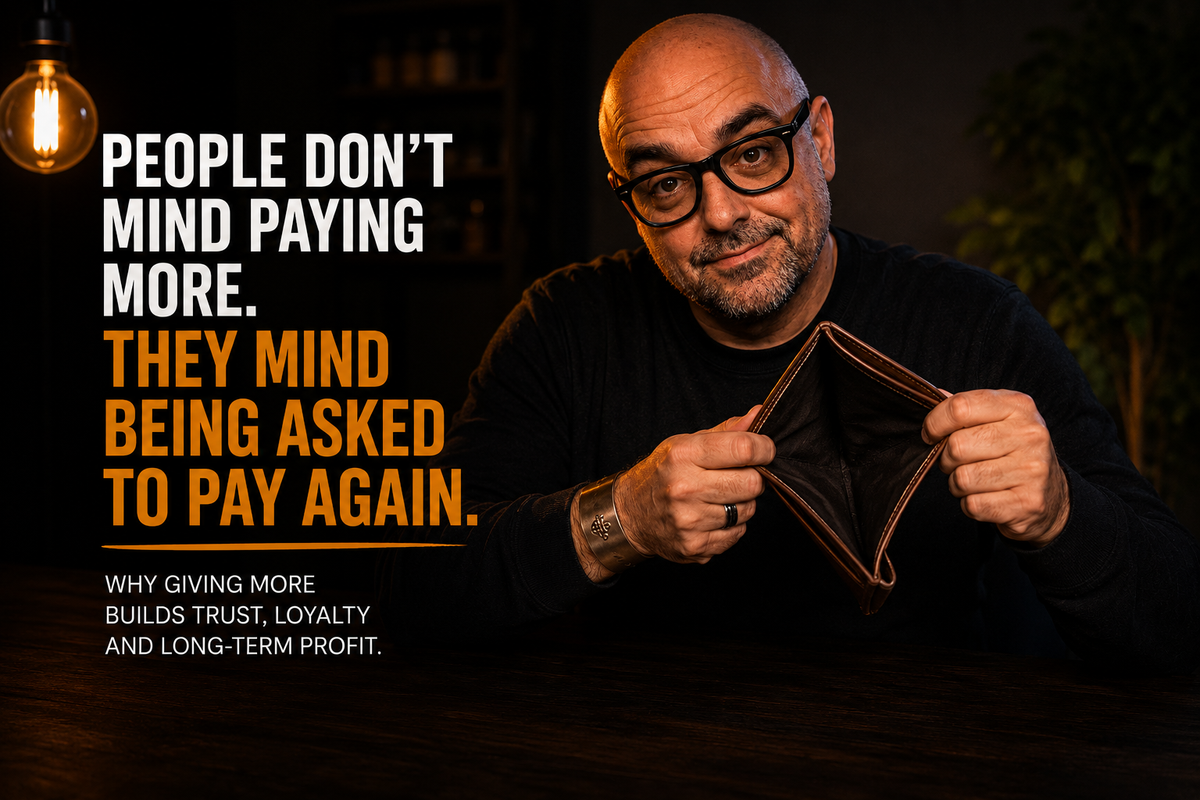
People don’t mind paying more. They mind being asked to pay again. Why giving more upfront creates trust, loyalty and profit.
I've watched businesses lose customers over a £5 charge they never saw coming.
Not because the customer couldn't afford it. Because they felt tricked.
The advertised price was £50. The final price was £73. Somewhere between clicking "book" and entering payment details, the business added fees for things the customer assumed were included.
Baggage. Seat selection. Printing a boarding pass. WiFi. Breakfast. Parking.
Each charge makes sense in isolation. Together, they create something worse than expense. They create resentment.
I've spent years in hospitality, and I've learned something most businesses get backward: customers rarely complain about paying £500 for something they loved. They regularly complain about paying £5 ten separate times after they thought they had already bought it.
That distinction sits at the heart of a bigger truth.
The Real Cost of Nickel and Diming
Airlines pioneered the art of charging for everything. Baggage fees. Seat selection. Priority boarding. Food. Drinks. Sometimes even customer service.
Hotels followed. Parking fees. WiFi charges. Breakfast add-ons. Spa access. Towels by the pool. Resort fees that appear at checkout.
Ticketing platforms joined in. Booking fees. Processing fees. Delivery fees for digital tickets.
The logic seems sound. Each fee generates revenue. Multiply small charges across thousands of transactions, and the numbers look impressive on a spreadsheet.
But spreadsheets don't measure frustration.
They don't capture the moment a customer realises the £99 hotel room actually costs £140 after parking, WiFi, and a "resort fee" they never requested.
They don't track the conversation that happens later. The one where your customer tells five friends to avoid your business.
They don't show up in the review that starts with "Great stay, but..." and ends with a three-star rating instead of five.
Small charges create irritation far beyond their monetary value. A £3 WiFi fee doesn't just cost £3. It costs trust.
People Want Certainty More Than Savings
I've noticed something about human behaviour. People hate surprises when it comes to money.
You can charge more upfront. You can be the expensive option. But if you tell people exactly what they'll pay and what they'll get, they relax.
Decision fatigue is real. Every time you ask a customer to make another purchasing decision, you create friction.
Do I want breakfast? Should I pay for WiFi? Is parking worth £15? Do I need priority boarding?
Each question pulls focus away from the experience you're trying to deliver. Instead of enjoying their stay, your customer is doing mental math and questioning whether they're being taken advantage of.
All-inclusive models remove this entirely. You pay once. Everything else is handled.
Customers rarely remember the cheapest experience. They remember how they felt.
When you remove constant purchasing decisions, people focus on what matters. The quality of the room. The taste of the food. The feeling of being looked after.
Why Businesses Get This Wrong
Most organisations optimise individual transactions. They measure revenue from extras:
- Drink sales
- WiFi fees
- Parking charges
- Upgrade fees
- Service charges
Each line item looks profitable. Each fee seems justified.
What they fail to measure:
- Customer frustration
- Reduced repeat business
- Negative reviews
- Lost referrals
- Lower lifetime value
I've seen this play out at scale. A business makes an extra £50,000 a year from parking fees. They lose £200,000 in repeat bookings because customers choose competitors who include parking.
The spreadsheet shows profit. The business shows decline.
The problem is measurement. When you only track what you charge for, you miss what you lose.
Premium Pricing Works When Value Is Clear
Customers will pay more when they believe everything is included.
Look at membership models. Costco charges an annual fee, then offers lower prices and better value inside. Amazon Prime costs money upfront, then removes friction from hundreds of transactions.
Both companies could nickel and dime. They could charge per delivery, per return, per customer service call.
They don't. They bundle value into a single price.
The result? Customers spend more overall because they trust the model.
Luxury resorts and high-end cruise lines operate the same way. You pay a premium price. Everything else is included. Meals. Entertainment. Activities. Tips.
The price is higher. The perceived value is higher too.
When customers believe you're looking after them rather than extracting every possible pound, they stop questioning every purchase. They start enjoying the experience.
The Economics of Inclusion
Here's what most businesses miss. Many extras cost far less than customers imagine.
A cup of coffee costs pennies to make. Charging £3 for it generates revenue. Including it in the price generates goodwill.
WiFi costs roughly the same whether one guest uses it or a hundred. Charging £5 per person creates friction. Including it removes a barrier.
Parking spaces often already exist. Charging for them feels like a tax. Including parking feels like service.
The customer sees significant value. The business incurs limited extra cost.
This creates a powerful value gap. You're delivering more than you're spending, and customers feel like they're getting more than they paid for.
That feeling is worth more than any individual transaction.
Trust Creates Profit
Trust reduces buying resistance.
When customers believe you're on their side, they spend more over time. Not because you're tricking them. Because they want to.
Trust drives:
- Repeat visits
- Recommendations
- Positive reviews
- Higher spending confidence
- Stronger brand reputation
I've watched this happen firsthand. At Potters Resorts, we built our model around inclusion. Guests pay one price. Everything else is covered.
Meals. Accomodation. Entertainment. Activities. Drinks.
We don't charge extra for things people expect. We don't surprise them with costs they hadn't budgeted for.
The result? We became and are the UK's number one resort. Not because we spent more on marketing. Because we understood what customers actually value.
They value knowing what they'll pay. They value feeling looked after. They value experiences that don't come with hidden costs.
When you remove friction, people come back. When they come back, they bring friends.
What This Means in Practice
You don't have to give everything away for free. You need to bundle intelligently.
Look at what you currently charge for separately. Ask yourself:
Does this fee create value for the customer, or does it create irritation?
If it creates irritation, include it in your base price.
Yes, your base price will be higher. That's the point.
Customers will pay more when they understand what they're getting. They resist paying more when they feel nickel and dimed.
The goal isn't to charge less. The goal is to create an experience that feels worth more.
The Best Businesses Make Buying Simple
I've noticed a pattern. The businesses that win long-term are the ones that remove complexity.
They don't ask customers to make ten decisions. They make nine of those decisions on behalf of the customer.
They don't hide fees in fine print. They put the full price upfront.
They don't optimise for extracting maximum revenue per transaction. They optimise for creating maximum happiness per customer.
That shift in thinking changes everything.
When you focus on extraction, you win transactions. When you focus on value creation, you win relationships.
Transactions are one-time events. Relationships compound over time.
Why This Matters Now
We're entering an era where AI handles transactions faster and cheaper than ever before.
Automation makes it easy to add fees. Dynamic pricing can optimise revenue per booking. Algorithms can test which charges customers will tolerate.
But technology can't create happiness. It can't build trust. It can't make someone feel genuinely cared for.
The businesses that win in the next decade won't be the ones that extract the most value from each transaction. They'll be the ones that create the most value for each customer.
That's why we built the Customer Happiness Score. Because in a world where everything can be automated, measured, and optimised, happiness remains the one thing that can't be faked.
You can't engineer your way to a five-star review if your customer felt nickel and dimed. You can't automate loyalty if your pricing model creates resentment.
Happiness is the signal that tells you whether your business model actually works for the people you serve.
The Future Belongs to Businesses That Simplify
I believe the companies that thrive long-term will be the ones that stop asking customers for their wallet every five minutes.
They'll charge more upfront. They'll include more in the price. They'll make the experience feel effortless.
Customers will reward them for it.
Not because people love spending money. Because they love feeling like someone actually cares about their experience more than their credit card.
The choice is simple.
You can optimise for transactions. Or you can optimise for happiness.
One builds a business. The other builds a legacy.