
Satisfaction is a Boardroom Metric. Happiness is a Cultural One.
Most businesses measure satisfaction for the boardroom. The best publish happiness within 24 hours and turn feedback into action, culture and growth.
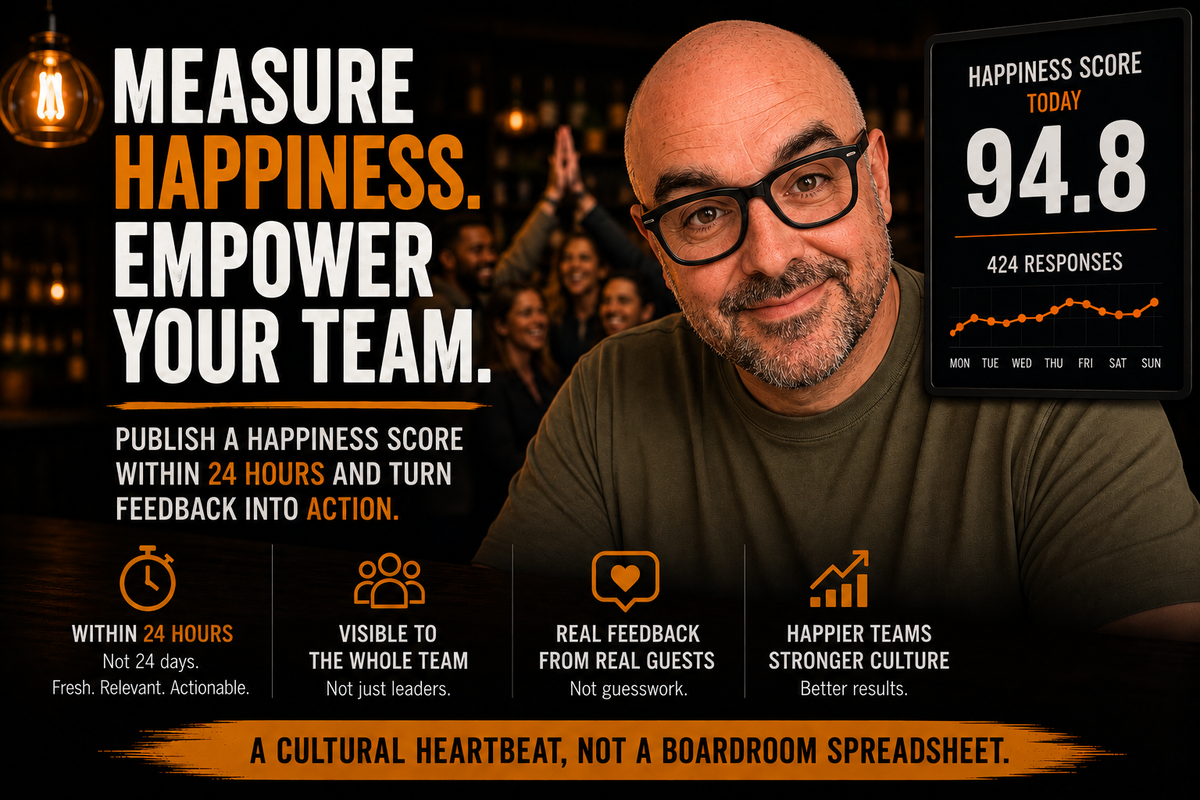
Most businesses are measuring the wrong thing for the wrong audience.
They chase satisfaction scores that travel upward, get reported once a quarter, and land in a management meeting nobody actually cares about. The team delivering the experience never feels it. The score arrives too late, too detached, and too lifeless to change anything.
Here's what happens instead: you publish a happiness score to your entire team within 24 hours. It stops being something that happens to the business from above. The memory is still fresh. The emotion is still real. And suddenly, you have a cultural heartbeat everyone owns.
The Boardroom Metric Trap
Satisfaction scores were designed for decks. They exist to reassure leadership, update investors, and fill quarterly reports. The problem is that the people actually serving customers never feel the pulse of those numbers.
A number reported once a month is dead on arrival.
When employees take time to give feedback but nothing changes, surveys actually damage engagement. People can tell their input is going unnoticed. They stop offering it.
The metric becomes theatre. Something you measure because you're supposed to, because everyone else does, because it fills a slide in the board deck. But it doesn't move the business forward.
The 24-Hour Shift
Publishing a happiness score to your team within 24 hours changes the entire game.
You're no longer reporting what happened last month or last quarter. You're sharing what just happened while everyone still remembers the guests, the moments, the friction points. The score becomes a living thing the team can actually use.
Real-time feedback tools generate higher response rates and uncover engagement trends faster than annual surveys. Always-on listening gives people an instant way to share what's on their minds. Leaders can spot trends, address issues early, and keep engagement from quietly slipping.
When the team sees the score, celebrates it, learns from the why, and uses it to improve, happiness becomes the operating system. Almost all other metrics take care of themselves.
The Customer Steps In as Teacher
Here's the elegant mechanic that makes this work: the manager steps out of the firing line. The customer steps in as teacher.
You can't argue with it.
It's not your boss's opinion. It's the person you just served telling you how they felt. That's what democratises feedback. Team members don't push back when they can see what customers are saying directly to them.
When guests see their feedback being acknowledged and addressed, it builds trust and loyalty. Transparently collecting and acting on feedback demonstrates a real commitment to continuous improvement.
The score stops being a weapon management uses against the team. It becomes a mirror the whole business looks into together.
Why NPS Is Structurally Broken
Net Promoter Score sounds scientific. It feels like a standard. Two-thirds of Fortune 1000 companies use it or one of its variants.
There's just one problem: it doesn't work.
A 9 is not a promoter. Someone who gives you a 9 is going to tell people why they're not a 10. A 0 and a 6 are both called detractors, but they're completely different. A 6 is apathetic. A 0 will shred you on online reputation.
NPS treats a score of 0 the same as a 5 or 6, even though they represent totally different sentiments. A 2007 study found zero evidence that NPS predicted growth better than basic customer satisfaction scores. Companies have gone bankrupt despite great NPS numbers.
The system is built to find detractors, not amplify advocates. And in hospitality, where emotion is everything, that's backwards.
The Right Question Changes Everything
Ask "How do you feel about our restaurant?" not "How happy are you?"
Saying the word happy is like saying "don't think about a blue goldfish." You can't stop yourself. The moment you put the word in the question, you've already nudged them. You've handed them the answer before they've even thought about it.
Use five faces. No leading language. Completely agnostic.
The question shapes the answer. If you want to hear what customers actually feel rather than what you've designed them to say, you have to get out of the way.
What You Actually Do With the Data
This is where most businesses fail. They collect feedback and then do nothing with it.
Here's what changes when you measure happiness:
Unhappy customers: Own it. Contact them immediately. Give them somewhere to go before they hit online reviews. You'd rather be heard by them than have them heard by everyone else.
Actively Happy customers: Ask them to tell friends. Ask them to write reviews. Use their happiness as fuel for your marketing.
The why: Celebrate it internally. If customers call out team members by name, make that visible across the culture. Use the feedback to show people their work matters.
Email segmentation: Create lists segmented by happiness level. You can talk to your actively happy customers knowing they're brand advocates. You're not guessing. You know.
In hotels specifically, satisfied employees contribute to a 12% increase in profitability. Properties with an engaged workforce see 24% less turnover. Happiness drives business outcomes.
The Kaizen Principle: Good Enough Is Decline
"Good enough" is a slow decline dressed up as stability.
The Kaizen approach focuses on continuous improvement through small, daily changes that result in major improvements over time. You don't take drastic, rigorous leaps. You apply incremental changes while keeping the customer at the centre.
Until every single customer is actively happy, you keep iterating. And even then, you still listen to the why to make sure you're constantly improving your product.
You cannot stay still in business. The moment you think the reviews look okay and the scores are decent, you've stopped listening. And when you stop listening, you start dying.
The Cultural Compounding Effect
When happiness becomes your operating system, something shifts.
You stop managing ten different dials at once. You stop worrying about the next Trustpilot review when you know you've got a strong customer happiness score and you're delivering a great product using the why to constantly improve.
Marketing talks to the happiest customers. Operations uses real feedback to iterate. Leadership sees a number the whole team understands and owns.
Getting employees actively involved and engaged leads to more efficient processes, lower turnover, and higher rates of innovation. Engaged employees feel they have an impact on company performance. They're more likely to try new ideas.
For 82% of workers, feeling happy and engaged at work drives their productivity. That's not soft stuff. That's the engine.
A Boardroom Spreadsheet or a Cultural Heartbeat
You have a choice to make.
You can keep chasing a satisfaction score that gets reported once a quarter, lives in a deck, and means nothing to the people actually serving your customers. You can keep using a metric designed for the boardroom that nobody on the floor really cares about.
Or you can publish a happiness score within 24 hours. You can make it visible, real, and owned by everyone. You can turn feedback into a living loop where customers teach your team, your team improves the experience, and happiness compounds.
One is a number. The other is a feeling that runs through the entire business.
That's the choice.